BioDrop Solutions has been featured in professional medical and innovation media for its work on non-invasive molecular diagnostics and tear-based biomarker technologies.
Featured Media: BioDrop Solutions in Medicus Bonus
Introduction & Context
This feature article originally appeared in Medicus Bonus (Issue No. 81, November/December 2025, pp. 44–45), a leading professional Latvian medical journal distributed to physicians, medical specialists, and healthcare researchers across the country.
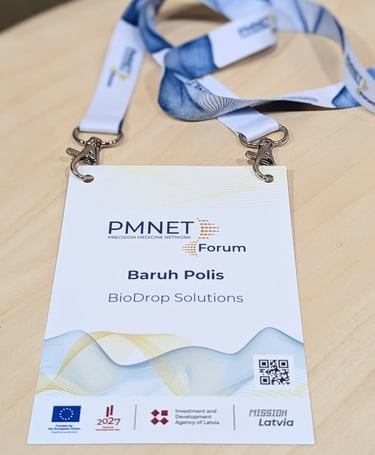
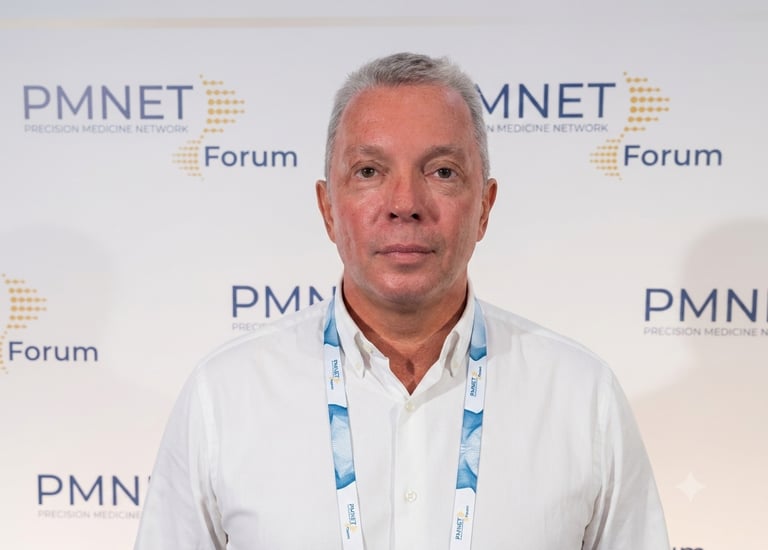
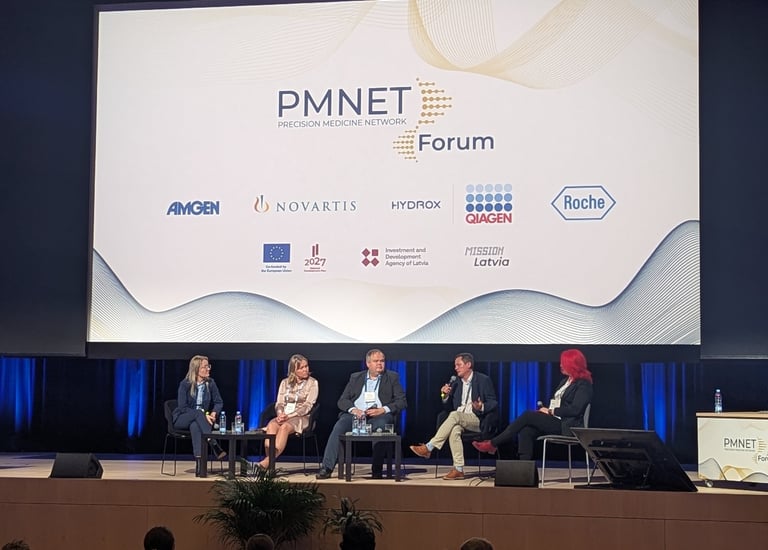
The article was authored by medical and tech journalist Eduards Ritums, a Project Manager at the Latvian Startup Association (Startin.LV) affiliated with Rīga Stradiņš University. The conversation took place following an interview conducted at the 4th Precision Medicine Networking Forum in Riga, Latvia (October 9–10, 2025), where Dr. Baruh Polis presented BioDrop Solutions and its novel non-invasive microRNA diagnostic platform.
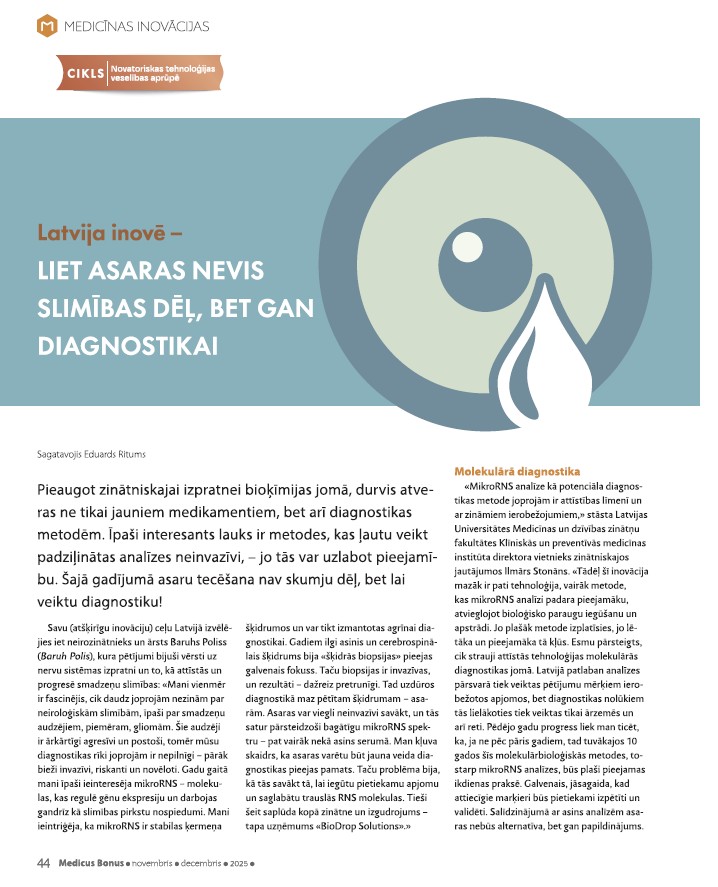
Latvia Innovates: Shedding Tears Not out of Sorrow, but for Diagnostics
Author: Eduards Ritums
Publication: Medicus Bonus, No. 81 (Nov/Dec 2025)
As scientific understanding in biochemistry advances, new frontiers are expanding not only for novel therapeutics, but also for diagnostic methodologies. A particularly promising domain lies in non-invasive approaches capable of delivering high-resolution biological analysis, thereby significantly increasing clinical accessibility. In this instance, lacrimal fluid is collected not due to grief, but to drive precision diagnostics.
A New Paradigm in Liquid Biopsy
Neuroscientist and physician Dr. Baruh Polis chose a unique, innovative trajectory in Latvia, focusing his research on functional neuroanatomy and the pathophysiological mechanisms underpinning Central Nervous System (CNS) disorders:
"I have always been fascinated by the extensive unknowns surrounding neurological pathologies, particularly aggressive brain malignancies like gliomas. These tumors demonstrate extreme invasiveness and poor prognosis, yet our current diagnostic toolkit remains suboptimal—frequently relying on invasive, high-risk procedures that yield delayed findings. Over time, my focus centered on microRNAs (miRNAs)—regulatory non-coding RNA molecules that modulate gene expression and serve as precise molecular fingerprints of disease. I was particularly intrigued by their biochemical stability within physiological fluids and their potential for early-stage screening.
Historically, peripheral blood and cerebrospinal fluid (CSF) have served as the principal matrices for liquid biopsy applications. However, tissue and CSF biopsies carry procedural invasiveness, and serum analyses can yield equivocal findings. This led me to investigate an underutilized biological fluid in diagnostic oncology: lacrimal fluid (tears). Tears can be collected rapidly and non-invasively, presenting a remarkably rich miRNA expression profile—exceeding even that of blood serum. It became evident that lacrimal biofluids could form the foundation of a novel diagnostic modality. The engineering challenge lay in capturing adequate volumetric yields while preserving the integrity of fragile RNA species. The convergence of this scientific rationale and translational engineering culminated in the founding of BioDrop Solutions."
Molecular Diagnostics & Clinical Integration
"MicroRNA profiling as a diagnostic tool remains an evolving discipline subject to analytical considerations," notes Dr. Ilmārs Stonāns, Deputy Director for Scientific Affairs at the Institute of Clinical and Preventive Medicine, Faculty of Medicine and Life Sciences, University of Latvia.
"Consequently, this innovation represents not merely a detection assay, but a standardized platform that democratizes miRNA diagnostics by streamlining specimen collection and pre-analytical processing. Broad adoption will drive cost efficiencies and clinical scalability. The velocity of technological translation in molecular diagnostics is remarkable. While high-throughput molecular testing in Latvia is predominantly restricted to investigative academic settings—or outsourced internationally for specialized clinical cases—the progress observed over recent years suggests that miRNA-based profiling will enter routine clinical workflows within the decade. The critical prerequisite remains comprehensive biomarker validation. Rather than replacing venipuncture, lacrimal diagnostics will serve as a powerful complementary matrix, expanding the multidimensional diagnostic landscape."
The Ocular Surface: A Biomarker Matrix
Lacrimal fluid provides key analytical advantages: it is continuously secreted and, despite its low physiological volume, contains dense biological information. Comparative transcriptomic profiling indicates that human lacrimal fluid harbors approximately 315 distinct microRNA species, compared to 309 identified in blood serum.
Despite this potential, specimen sampling has posed historical challenges. Conventional tools—such as Schirmer strips or glass capillaries—harvest minimal volumes, induce mechanical ocular irritation (which alters lacrimal proteomic and transcriptomic composition), and fail to prevent rapid enzymatic RNA degradation.
"To overcome these limitations, we engineered a specialized hydrogel matrix—a soft, biocompatible ocular contact lens designed for brief 10-to-15-minute surface application," explains Dr. Polis. "During application, the matrix gently absorbs both the pre-ocular tear film and active lacrimal secretions. Synthesized from polyethylene glycol diacrylate (PEGDA), a biosafe polymer, the matrix incorporates two functional innovations: integrated ribonuclease (RNase) inhibitors to shield transcripts from enzymatic cleavage, and pH-stabilizing buffers engineered to maintain transcriptomic integrity for at least 48 hours at room temperature."
Dr. Stonāns adds: "Utilizing a contact-lens hydrogel polymer—a material already validated in ophthalmic manufacturing—and functionalizing it with stabilizing agents to preserve analyte integrity for downstream molecular processing is an elegant pre-analytical strategy. The key milestone moving forward will be demonstrating analytical concordance to establish laboratory adoption."
Artificial Intelligence and Pattern Recognition
Following harvest, samples undergo high-throughput molecular quantification—such as reverse transcription quantitative PCR (RT-qPCR) or next-generation RNA sequencing (RNA-Seq)—integrated with artificial intelligence (AI) pipeline architectures for pattern decoding. Dr. Polis notes that AI models identify complex multi-analyte signatures correlating with specific oncological phenotypes, with high-grade gliomas serving as the primary diagnostic index.
Given the transcriptomic complexity of hundreds of co-existing miRNA species, traditional statistical approaches targeting isolated markers often lack requisite sensitivity. Machine learning classifiers evaluate entire expression profiles, unmasking non-linear biological correlations invisible to conventional analytical methods.
"We are constructing machine learning algorithms that process multi-dimensional transcriptomic datasets to output a normalized diagnostic risk score," states Dr. Polis. "These models iteratively refine as dataset volume grows. Furthermore, we are exploring federated learning frameworks, enabling cross-institutional model training across global clinical sites without exposing raw patient data, maintaining strict data privacy compliance. The architecture is non-invasive, scalable, and modular—extensible beyond neuro-oncology to encompass neurodegenerative disorders, ocular pathologies, and systemic metabolic diseases such as diabetes."
Dr. Stonāns corroborates: "Lacrimal fluid contains systemic miRNAs and biochemical constituents originating well beyond the local ocular environment. While targeting CNS malignancies represents an ideal proof-of-concept given the anatomical proximity to the optic nerve and brain, the platform's diagnostic utility is intrinsically broad. Naturally, collecting biomarkers close to the target organ optimizes signal-to-noise ratios and diagnostic yield."
Translational Enterprise in Latvia
Dr. Baruh Polis incorporated BioDrop Solutions in Latvia in early 2025. Following an initial provisional patent filing in Ireland in August, a comprehensive UK patent application was executed in September, setting the stage for US intellectual property expansion in 2026.
"We are currently finalizing analytical prototypes alongside academic collaborative partners," outlines Dr. Polis. "Our commercialization roadmap follows a clear trajectory: complete benchtop prototype optimization in 2026, launch a pilot clinical validation study in 2027, and complete European regulatory filings (CE-IVD certification) by 2028."
Regarding the strategic selection of Latvia as a corporate base, Dr. Polis highlights the country's operational pragmatism and supportive biotechnology infrastructure:
"Upon evaluating the region, I recognized the agility of the Baltic startup ecosystem. Latvia offers strategic European positioning, highly skilled scientific human capital, and a clear regulatory framework tailored for deep-tech spin-offs. Operationally, Latvia provides a streamlined environment for corporate structuring, IP protection, and cross-border European collaboration. It provides high capital efficiency compared to Western European or North American hubs, allowing us to maximize research runway.
While challenges exist—such as scaling specialized wet-lab infrastructure and securing international venture capital—we view Latvia as an agile innovation hub while building international clinical partnerships for multi-center validation."
Outlook
"Our core objective is the democratization of advanced diagnostics," concludes Dr. Polis. "Consider a future where a patient conducts self-sampling at home using a standardized kit, dispatches the stabilized matrix to a central laboratory, and receives an AI-decoded risk stratification report for high-grade gliomas or other silent pathologies. This model reduces healthcare expenditure, expands screening access, and enables early intervention during actionable therapeutic windows. Throughout my clinical trajectory, I have witnessed patients succumb because intervention occurred too late in disease progression. Detecting a malignancy even a few months earlier fundamentally alters clinical trajectories. I am guided by what Steven Pinker conceptualizes as the Enlightenment ethos: the conviction that empirical reason, rigorous science, and humanism can systematically advance human well-being. In an era prone to cynicism, tangible scientific progress remains real, and non-invasive diagnostic platforms are an integral part of that paradigm shift."
Dr. Stonāns closes by noting that clinicians and patients alike stand to benefit from these diagnostic advances:
"High-resolution molecular profiles provide indispensable clinical context. While 'personalized medicine' has become a ubiquitous industry term, clinical care has always aimed to be patient-specific. Advanced transcriptomic diagnostic tools simply grant physicians the objective data necessary to execute precision medicine with unprecedented accuracy."
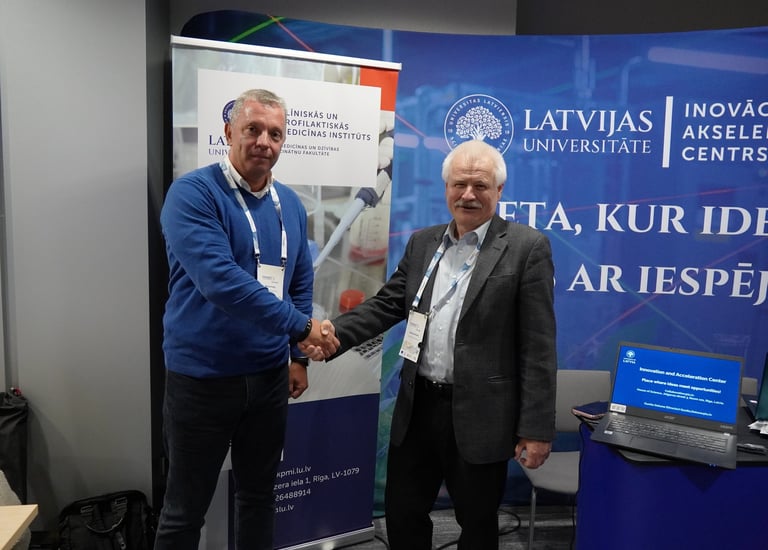
BioDrop Solutions founder Dr. Baruh Polis with Dr. Ilmārs Stonāns, Deputy Director for Scientific Work at the Institute of Clinical and Preventive Medicine, University of Latvia, at the 4th Precision Medicine Networking Forum in Riga, Latvia.
BioDrop Solutions is developing innovative technologies for non-invasive molecular diagnostics. Our work has attracted interest from medical journals and the innovation community, reflecting the growing potential of tear-based biomarkers and precision medicine.